
Little Bites, Big Nutrition:
Vegan Meals Inspiration
As a mom packing breakfast, snacks, and lunch every day for my 4 kids, I’ve learned that feeding kids isn’t just about filling a lunchbox. It’s about building meals that fuel their bodies, fit their personalities, and hold up until the last bell rings. Between school, sports, and growing appetites, I rely on a simple, balanced framework that works across ages and meal times. Here’s how I approach it:
Building Blocks: Protein + Carbs + Fiber + Fruit/Veggie + Fun
No matter their age, each meal or snack includes four essentials:
-
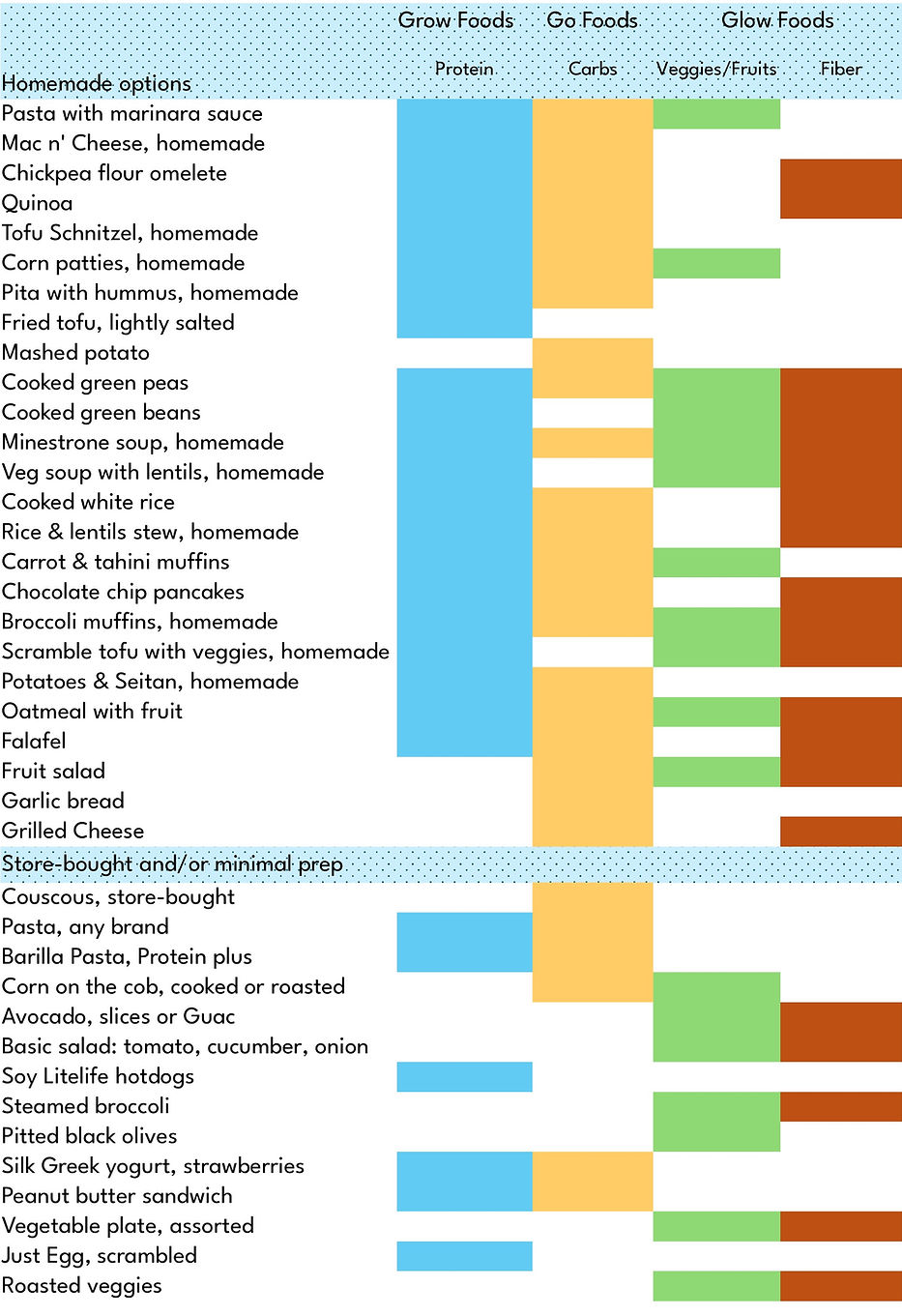
Grow Foods: Protein for energy, growth, and satiety—things like lentil patties, tofu cubes, or peanut/sunflower seed butter.
-
Go Foods: Carbs, or carbohydrates, are the body's main source of energy, found in foods like rice, oats, potatoes, fruits, and legumes.
-
Glow Foods:
-
Fiber to support digestion and stabilize blood sugar—whole grains, beans, veggies, or oats.
-
Fruits and vegetables for nutrients, hydration, and vitamins.
-
-
And something fun—like a homemade muffin, mini pretzels, or energy bar to make snack time a little brighter.
This method keeps things simple but structured.
At this point, some of you might think I'm a mom of foodies and that they eat most of what I make. Think again then... my two middle boys are extremely picky eaters, prefer plain pasta any day (no matter what great options I propose), and avoid many types of food. They challenge me daily, with every meal, which is mostly what inspired me to dedicating a separate space for kids' meals.
So to make things easier (and more visual), I created a color-coded nutrition grid—a practical tool that maps out all kinds of meals and snacks, both homemade and store-bought, by their main food group building blocks. It’s not about perfection, but about spotting balance at a glance, making meal planning quicker, and helping kids get what they need—even if they’re on a plain pasta streak.
Portion Size Matters (and Varies by Age)
One size definitely doesn’t fit all. My toddler gets tiny bites of a little bit of everything, while my older boys need more volume and heartier components to stay full. I’ll often pack the same main item but pair it with different sides or sauces depending on the child. Containers that are compartmentalized help me portion things out and avoid waste.
Allergen-Aware Swaps Keep It Inclusive
The 6 major most common allergens are dairy, egg white, egg yolk, wheat, soy and peanut. The first 3 allergens are nothing vegans should worry about in terms of bringing to the classroom environment, but we should all be mindful about other dietary sensitivities, which is made easier if we know how to make easy swaps, if needed. When my son was in pre-K, a teacher in his class was allergic to peanuts, so we used sunflower seed butter or tahini (sesame butter) with silan (date syrup) as a sandwich spread, instead of peanut butter. These adaptations make packing smoother and more inclusive, even when feeding a crowd.
🧃 A Note on Processed Foods: It’s Okay
While I love including homemade muffins, lentil patties, and fresh fruit when I can, the truth is—sometimes I also pack store-bought snacks. And that’s perfectly okay. Packing for multiple kids every day means choosing your energy wisely, and more often than not, a granola bar, a pouch of applesauce, plant-based nuggets or some crackers from the pantry is the thing that makes the day work.
Strictly homemade everything can quickly become overwhelming, especially when you’re juggling work, different appetites, schedules, and food preferences. Processed foods don’t automatically mean unhealthy—many packaged vegan options offer solid nutrition, and more importantly, they offer breathing room. There’s value in feeding your kids well, but also in keeping yourself well—and balance applies to parents, too. I am a strong believer in BALANCE.